


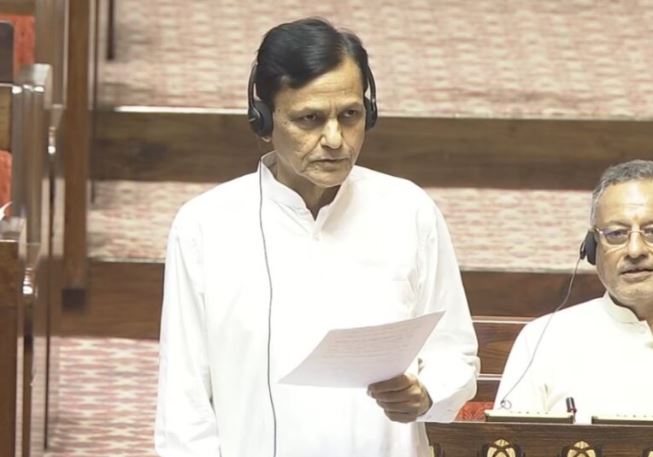
In a significant crackdown, law enforcement agencies in Delhi arrested 254 foreign nationals involved in drug trafficking since 2024, as reported by the government on Tuesday in Lok Sabha. Authorities seized narcotics valued at over ₹40.53 crore from these individuals.
The Deputy Minister for Home Affairs, Nityanand Rai, outlined the details of these arrests, which notably include residents from countries with reported drug trafficking connections, such as Nigeria. Areas affected include Khanpur Extension, Deoli, Sangam Vihar, Mehrauli, and Uttam Nagar.
The data shared in Parliament revealed that the arrests occurred predominantly over the span of two years, with 40 foreign nationals detained in 2024, 35 in 2025, and 15 in the first half of 2026.
The seized narcotics included heroin, cocaine, amphetamine, and MDMA, with the estimated value recorded at ₹12.75 crore in 2024, ₹14.27 crore in 2025, and ₹13.50 crore until June 2026.
Additionally, the minister reported that 103 foreign nationals were discovered living in the region without the mandatory tenant verification. In response, authorities have taken action against 63 landlords for failing to comply with regulations necessary for ensuring community safety.
Addressing the issue of drug trafficking, Rai emphasized the government’s “Zero Tolerance” policy against traffickers. The Narcotics Control Bureau (NCB) has adopted a technology-driven strategy to combat drug networks operating over online platforms and the darknet. Such advancements include the deployment of cybersecurity experts to trace darknet drug trafficking and cryptocurrency transactions.
The minister elaborated on the NCB’s vision document, which outlines a systematic approach to disrupt organized cyber-enabled drug trafficking. It proposes establishing dedicated Darknet and Cryptocurrency Cells in Anti-Narcotics Task Forces to facilitate more effective investigations.
The initiative aims to employ AI-enabled analytics and enhanced inter-agency collaboration, significantly increasing the efficiency of anti-drug operations.
Furthermore, the NCB has initiated specialized training programs focusing on cyber-enabled narcotics investigations in association with the US Drug Enforcement Administration. These programs emphasize digital forensics and monitoring of darknet activities.
The vision document charts a three-year roadmap to strengthen financial investigations and expand the Narco-Coordination Centre mechanism. The plan promotes international collaboration and includes the operation of a 24×7 MANAS helpline while encouraging a Mission Drug Free Campus initiative in educational institutions.
As the drug trade continues to pose challenges, experts advocate for ongoing support from community members and stakeholders in law enforcement. The government’s focus on integrating technology to combat drug trafficking reflects its commitment to addressing the complex nature of narcotics issues in urban areas like Delhi.


